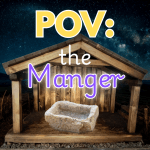
POV the Manger: Seeing the Christmas Story Through New Eyes
The Christmas story is one of the most familiar narratives in all of Scripture. Many of us can recite Luke 2:1-7 from memory, having heard it countless times throughout our lives. But what if we approached this beloved story from a completely different angle? What if we shifted our perspective to gain fresh insights into the birth of our Savior?
Why Point of View Matters in Understanding Scripture
Our point of view determines what we see. The direction we’re looking determines what comes into focus and what remains hidden. This principle applies not only to our physical sight but also to our spiritual understanding of Scripture.
The Gospel writers understood this concept well. Matthew, Mark, Luke, and John each wrote from their unique perspectives, which is why they provide different details about Jesus’ life and ministry. Each viewpoint offers something valuable that the others might miss.
Was Jesus Really Born in a Wooden Manger?
The Geography of Ancient Israel
When we consider the geographical context of first-century Israel, particularly the Galilee region, we discover something surprising: there was far more stone available than wood. This geographical reality challenges our traditional mental images of the nativity scene.
The Stone Manger Perspective
Rather than the familiar wooden cradle we often picture, Jesus was likely laid in a stone manger. This isn’t just an interesting historical detail—it connects to a broader pattern throughout Jesus’ life and teachings.
Consider that Jesus may not have been a carpenter in the traditional sense we imagine. The Greek word for his profession is “tekton,” which simply means craftsman. A tekton could work with metal, wood, or stone. Given the abundance of stone in the region, Jesus was more likely a stonemason.
How Jesus’ Teachings Reflect His Stone-Working Background
This perspective makes Jesus’ teachings even more meaningful when we consider his frequent use of masonry and stone imagery:
- “The stone that the builders rejected became the cornerstone”
- Naming Simon “Peter” (meaning rock) and saying “upon this rock I will build my church”T
- he parable of the wise builder who built his house upon a rock
These weren’t random metaphors—they likely reflected Jesus’ daily work experience with stone.
What About the Donkey in the Christmas Story?
The Missing Donkey
Here’s something that might surprise you: there’s no donkey mentioned in any of the four Gospel accounts of Jesus’ birth. Those familiar images of Mary riding a donkey to Bethlehem actually come from the Gospel of James, a text that didn’t make it into Scripture due to questions about its authenticity.
Why We Can Still Consider the Donkey’s Perspective
Even though donkeys aren’t explicitly mentioned in the biblical account, they were a primary mode of transportation in that era. It’s reasonable to imagine that Mary rode a donkey while Joseph walked alongside her on their journey to Bethlehem.
What Would the Donkey Have Witnessed?
The Census and Timing
The donkey would have witnessed the journey prompted by Caesar Augustus’s census decree. While there are some historical complexities regarding the exact timing and Quirinius’s governorship, the essential truth remains: this census fulfilled God’s plan to bring Mary and Joseph to Bethlehem at precisely the right moment.
The Journey to Bethlehem
This journey wasn’t just about Roman bureaucracy—it was the fulfillment of Micah’s prophecy that the Messiah would be born in Bethlehem. Every step of that donkey carried Mary closer to the fulfillment of ancient promises.
The Inn and the Manger
The “inn” wasn’t like a modern hotel with individual rooms. It was a large, single room where travelers stayed together. When there was no room in this main area, Mary and Joseph were relegated to the back, where the animal stalls were located.
These stalls, likely built into rock formations, would have been cave-like structures. Each stall had its own manger—a stone feeding trough where the animals received their daily provision.
The Deeper Meaning of Bethlehem and the Manger
Bethlehem: The House of Bread
The name “Bethlehem” means “house of bread.” This isn’t coincidental. Jesus, who would later declare “I am the bread of life,” was born in the house of bread. The one who brings spiritual nourishment and sustenance entered the world in a place whose very name proclaimed his purpose.
The Manger as a Symbol of Provision
Throughout Scripture, a manger represents provision and blessing. It’s where animals receive their daily sustenance—their source of life and strength.
The prophet Isaiah captures this beautifully: “An ox knows its owner and a donkey knows its master’s manger, but Israel does not know, my people do not understand” (Isaiah 1:3).
What Animals Understand That We Often Miss
Isaiah’s words carry a stinging rebuke. Even animals understand where their provision comes from. They know their source of blessing and nourishment. Yet God’s own people often fail to recognize that the Lord is their ultimate source of provision.
The donkey knows where to find sustenance. The ox recognizes its master’s care. But we, with all our intelligence and supposed wisdom, often look everywhere except to God for our provision and blessing.
Life Application
This Christmas season, challenge yourself to shift your perspective like the animals in the nativity story. Just as the ox and donkey instinctively knew their source of provision, we need to recognize and acknowledge that God is our ultimate source of blessing, nourishment, and sustenance.
This week, make it a daily practice to identify specific ways God has provided for you. Don’t just look for the big, obvious provisions—notice the daily bread, the small mercies, the quiet blessings that sustain you.
Ask yourself these questions:
- Do I recognize God as my primary source of provision, or do I look to other sources first?
- How can I develop the same instinctive trust that animals have toward their source of sustenance?
- What would change in my life if I truly believed that God is my manger—my reliable source of daily provision?
- Am I more like the wise animals who know their master’s care, or like the people Isaiah described who “do not understand”?
The stone manger reminds us that our Savior came not in luxury, but in the place of provision. He entered the world where the hungry are fed, where the needy find sustenance. This Christmas, may we have the wisdom of the ox and donkey—may we know our Master and trust in His provision.
Sermon video on YouTube: https://www.youtube.com/watch?v=cNR_vMj3DD4
[Blog post created by Sermon Shots from original sermon content preached by Rev. Kent F. Jackson on November 30, 2025.]
 nicodemus3719